⏳ The Time Machine
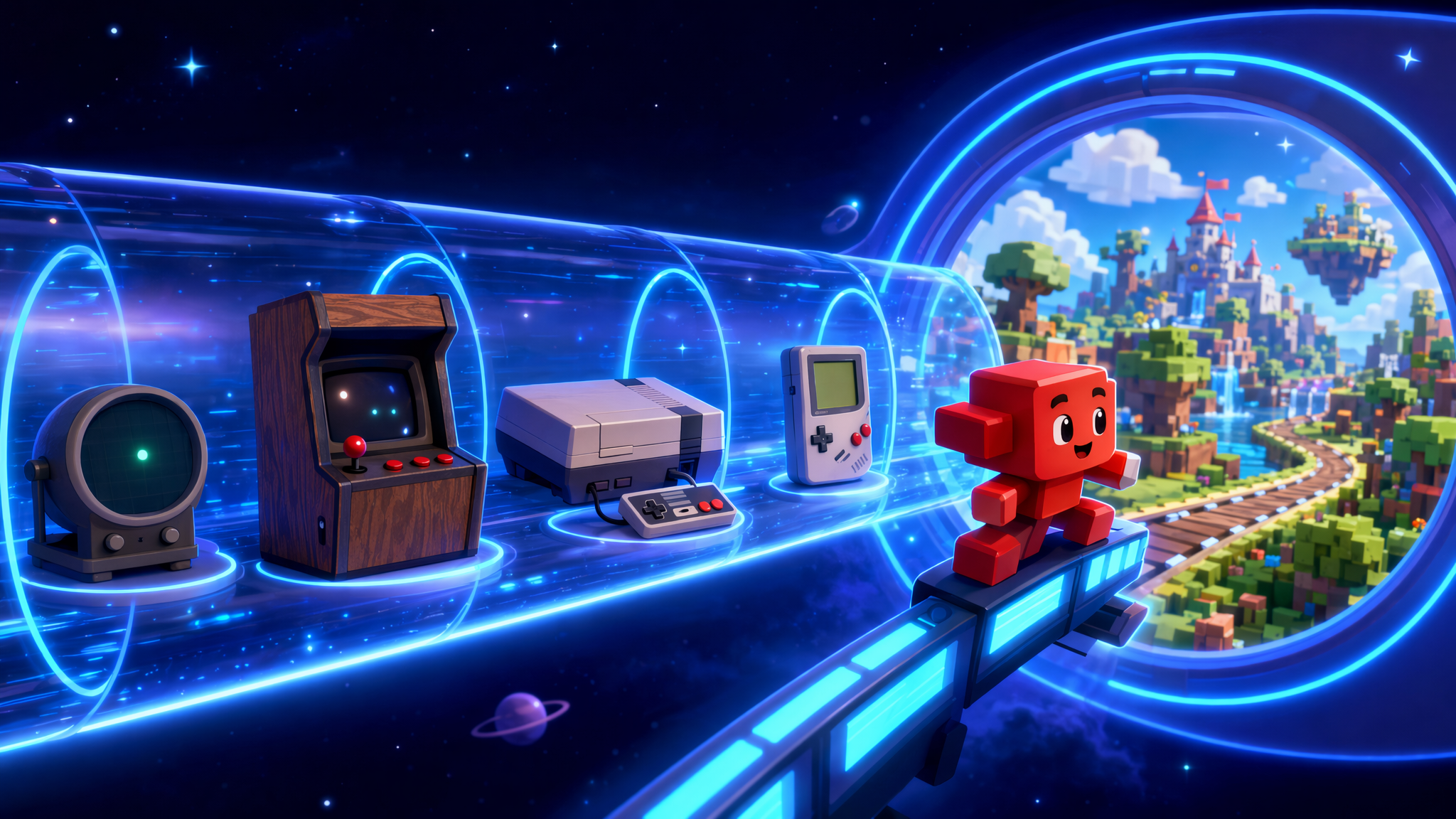
Buckle up — we're getting in a time machine. ⏳ Video games started out almost unbelievably simple, and got more amazing every few years.
Scroll down through the years and watch a glowing dot grow into whole living worlds. Ask a grown-up which of these they played!
 ⚡⚡1958–1962
The First Sparks
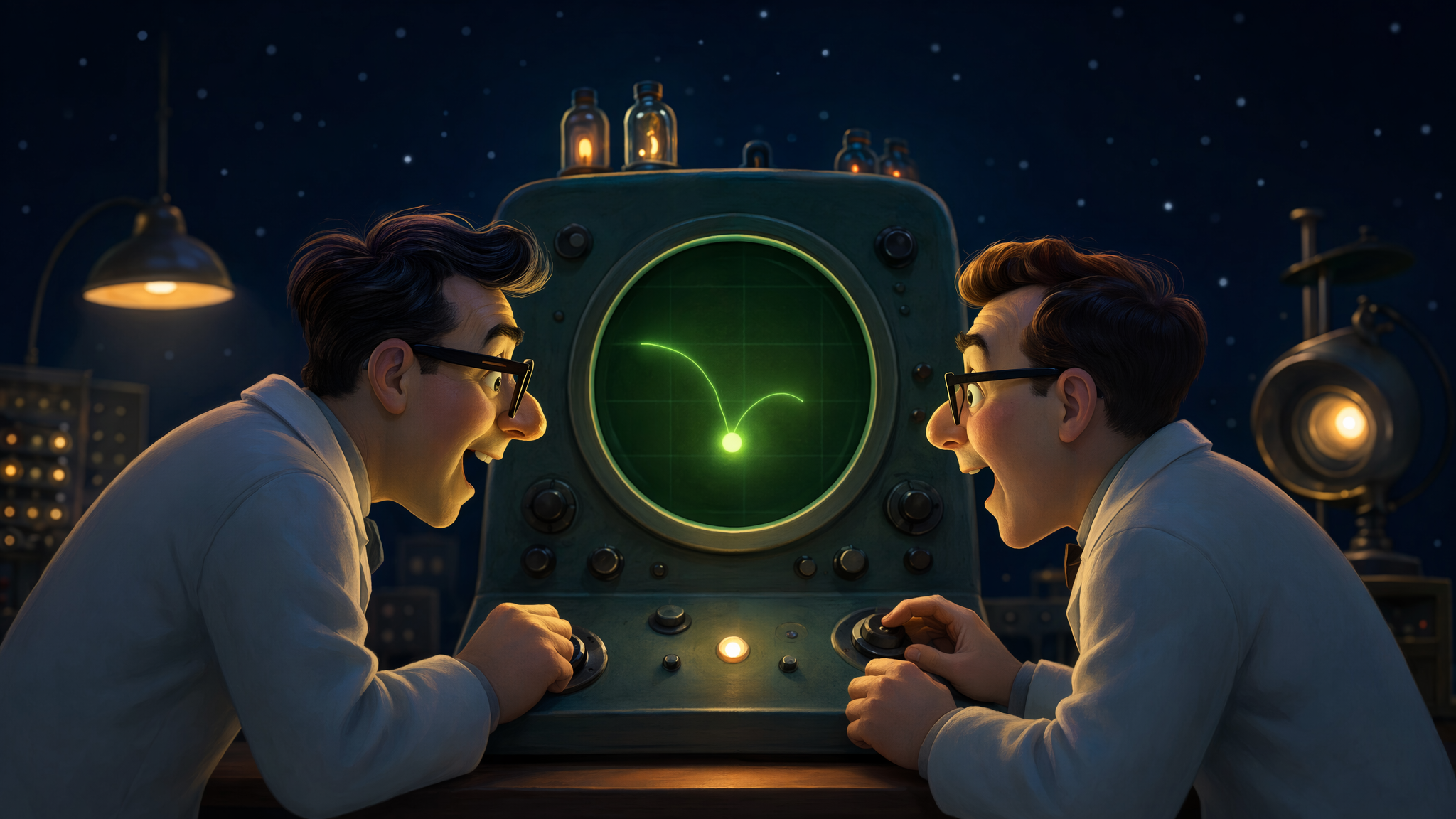
Picture a science lab in 1958, crammed with machines built to study rockets and explosions — serious stuff, no toys allowed. A physicist named William Higinbotham got bored of the dull demos, so he wired a glowing dot onto a little round screen and made it bounce back and forth like tennis. Visitors lined up around the room to play it. A few years later, students built Spacewar! — two tiny rocket ships duelling among the stars. Nobody called it an 'industry' yet. These were just curious people discovering that a screen could be something you play WITH, not just look at.
🎮 Tennis for Two · 1958🎮 Spacewar! · 1962The big leap 💡 Scientists turned lab machines into the very first things you could play on a screen.
Whoa! 🤯 Here's a real brain-bender: people still argue TODAY about which game was truly the first — there's honestly no agreed answer. You're allowed to pick your favorite.
 🕹️🕹️1971–1981
Quarters, High Scores & Mascots: the Arcade Boom
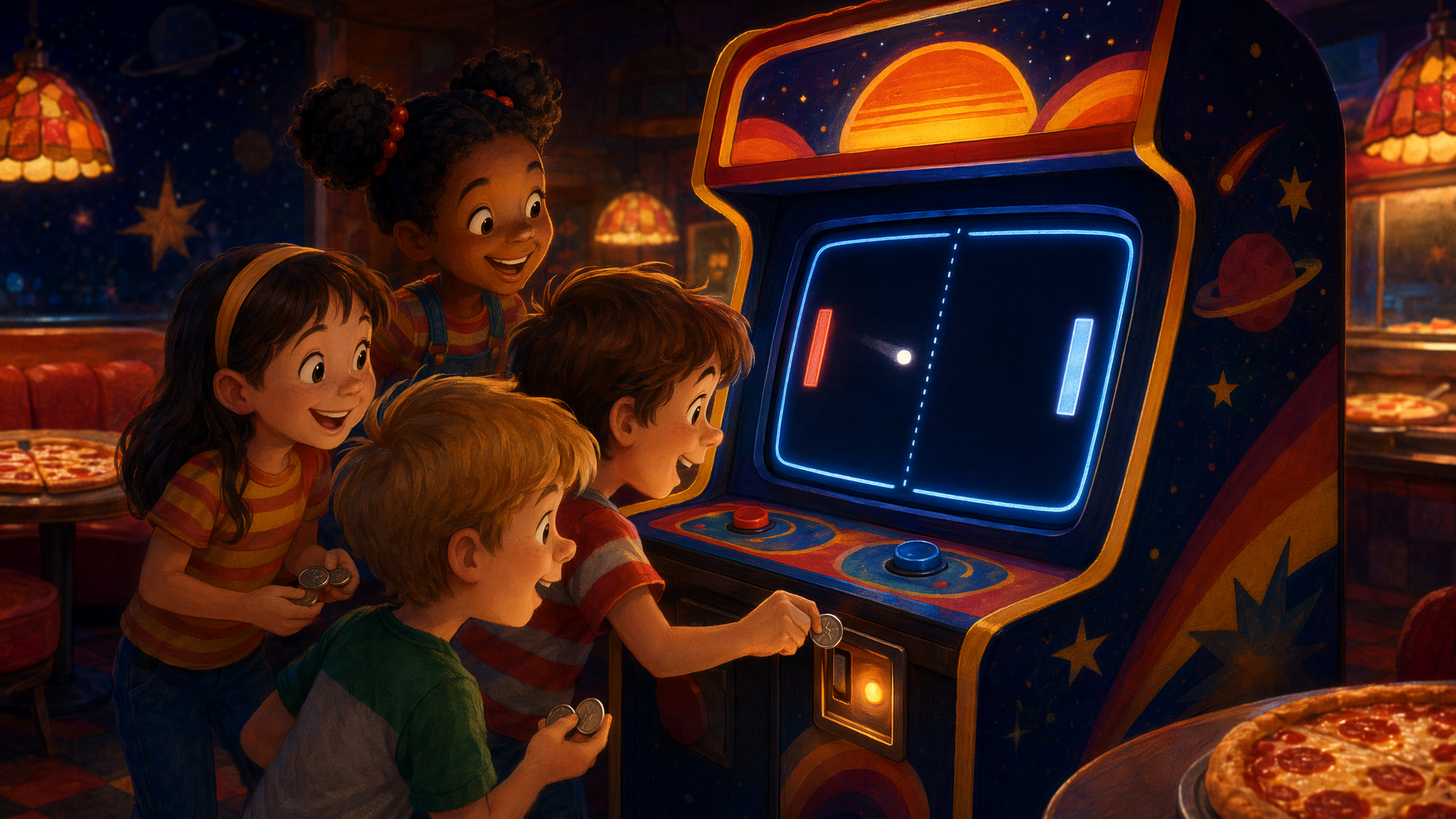
For over a decade, games hid inside university labs where almost no kid could ever touch them. Then someone had a wild idea: what if you put a game in a wooden box, stuck it in a pizza place, and charged a quarter a play? Along came Pong — just two paddles and a bouncing ball — and it was so simple that anyone understood it in about two seconds flat. Crowds packed so tightly around the machines that one famously stopped working… because it was jammed completely full of quarters with no room for more. Then the boom got bigger: Space Invaders let you chase a HIGH SCORE saved right on the machine, Pac-Man became the first superstar mascot, and Donkey Kong sent a little jumping hero named 'Jumpman' — soon renamed Mario — leaping over barrels, inventing the whole platformer in the process. Games had escaped the lab and found the whole world.
🎮 Pong · 1972🎮 Space Invaders · 1978🎮 Donkey Kong · 1981The big leap 💡 Games left the lab for the arcades — and the high score to chase, the first famous mascots, and the very first platformer all arrived in one coin-gobbling gold rush.
Whoa! 🤯 Funny twist: Pong wasn't actually the first game you could buy — it was just the first to become a GIANT hit. Being first doesn't always mean being remembered!
 💥💥1977–1983
Games Come Home… Then Crash
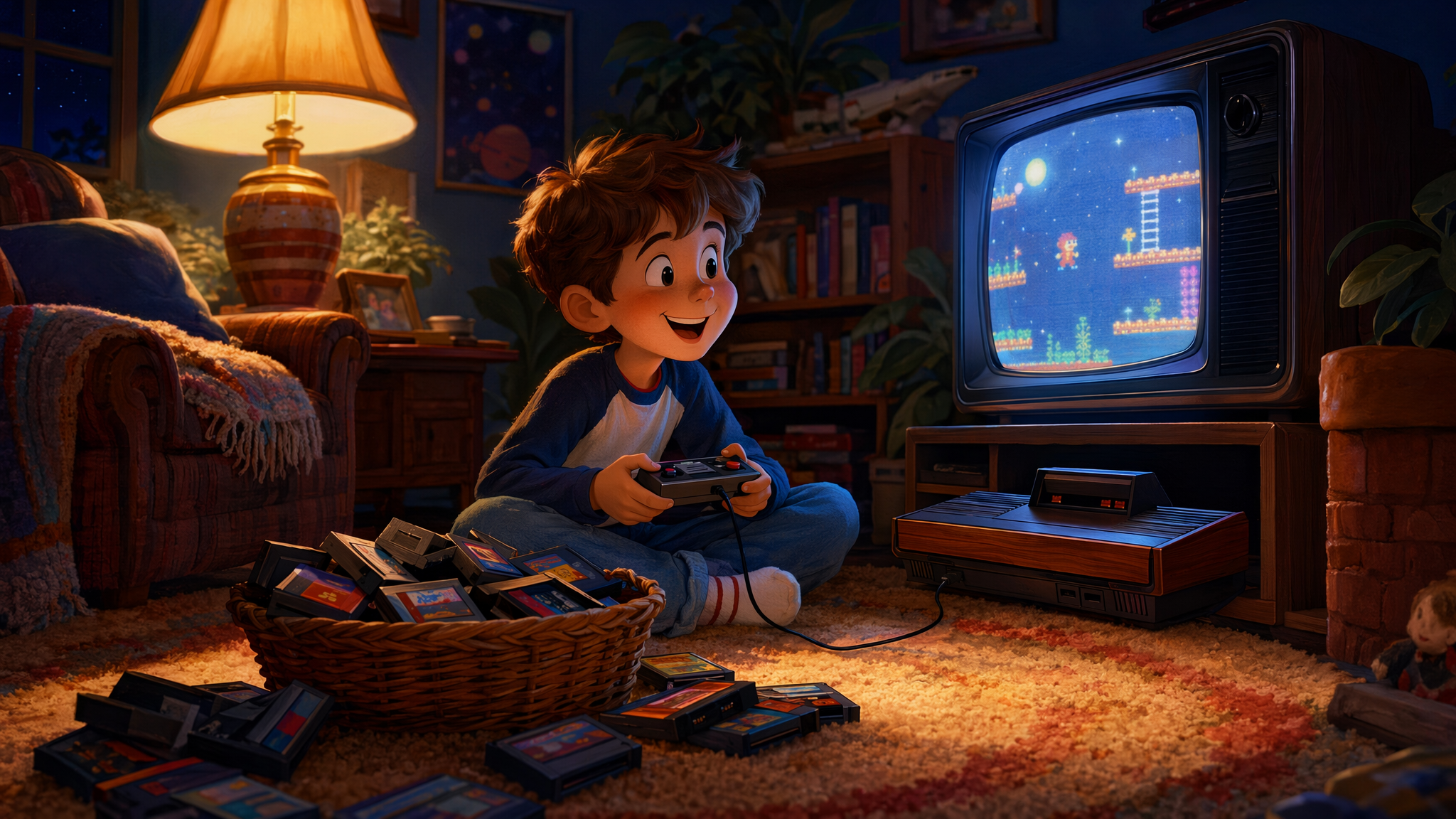
The Atari 2600 did something sneaky-brilliant: instead of one built-in game, it used swappable cartridges, so a single machine could play hundreds of different adventures. Suddenly the arcade lived in your living room, and gaming became a thing whole families did together. But the gold rush got greedy — companies pumped out piles of rushed, broken games, and players stopped trusting that anything was any good. The whole business crashed so hard that Atari secretly buried truckloads of unsold cartridges in a New Mexico desert. For a while, grown-ups were sure video games had just been a silly fad — over for good.
🎮 Atari 2600 · 1977🎮 E.T. (the flop) · 1982The big leap 💡 Swappable cartridges meant one machine could play hundreds of games — until a flood of bad ones broke players' trust.
Whoa! 🤯 The desert burial really happened — and in 2014, diggers went back and pulled hundreds of those Atari cartridges out of the sand. The legend was true all along.
 🍄🍄1985
The Great Comeback
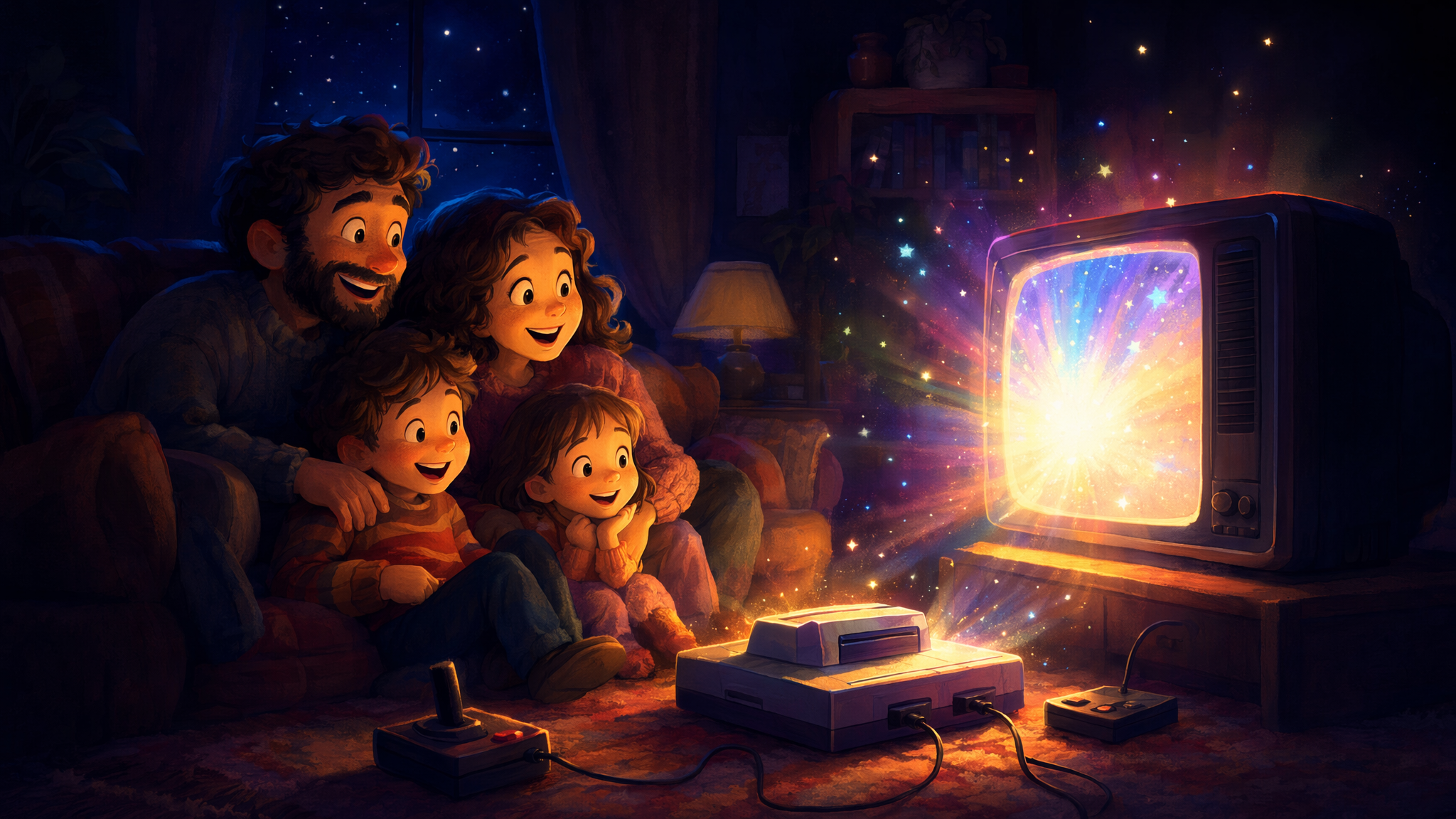
Everyone had written video games off as dead — a toy that had its moment and fizzled out. Then a small Japanese company called Nintendo did two clever things. First, they promised stores that every single game would be checked for quality, so people could trust them again. Then they released a game about a round-nosed plumber dashing through an enormous world that scrolled sideways seemingly forever, stuffed with secret pipes and hidden coins. Kids were instantly hooked, and games came roaring back to life — this one adventure basically taught a whole generation what the words 'video game' even mean.
🎮 Super Mario Bros. · 1985🎮 the NES · 1985The big leap 💡 Nintendo won trust back with a quality 'Seal' and worlds that scroll smoothly sideways forever.
Whoa! 🤯 That plumber's world hid so many secrets that certain warp pipes could fling you across whole chunks of it at once. Players spent years hunting them all down.
 💨💨1988–1991
The 16-Bit War
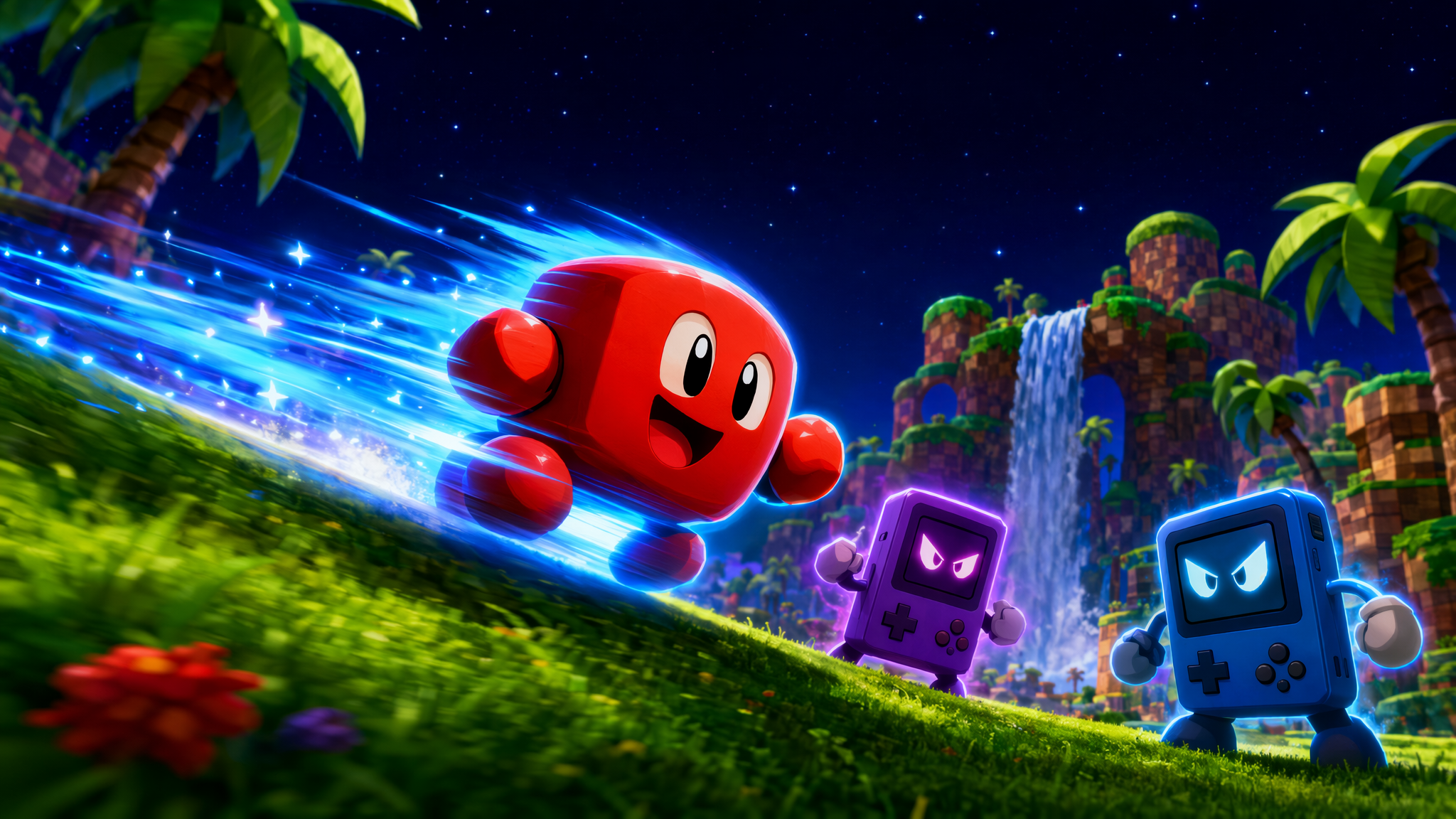
New, more powerful '16-bit' machines could show way more colors, bigger characters, and motion so fast and smooth it felt like a different universe. And for the first time there wasn't just one king — TWO companies, Nintendo and Sega, went to war for the TV in your living room. Sega's secret weapon was a blue speedster who blazed through loop-the-loops so fast your eyes could barely keep up, practically daring you to call Nintendo too slow. Kids picked sides like sports teams and argued about it on the playground — Nintendo or Sega? — as if the whole world depended on the answer.
🎮 Sonic the Hedgehog · 1991🎮 SNES vs Genesis · 1990The big leap 💡 Stronger 16-bit machines brought more colors, bigger characters and faster motion — and two giants battling for your living room.
Whoa! 🤯 Sega's famous brag that it was faster — 'Blast Processing' — was mostly just clever advertising, a cheeky wink to wind Nintendo fans up. The rivalry was half the fun.
 🎒🎒1989–1996
A Whole World in Your Pocket
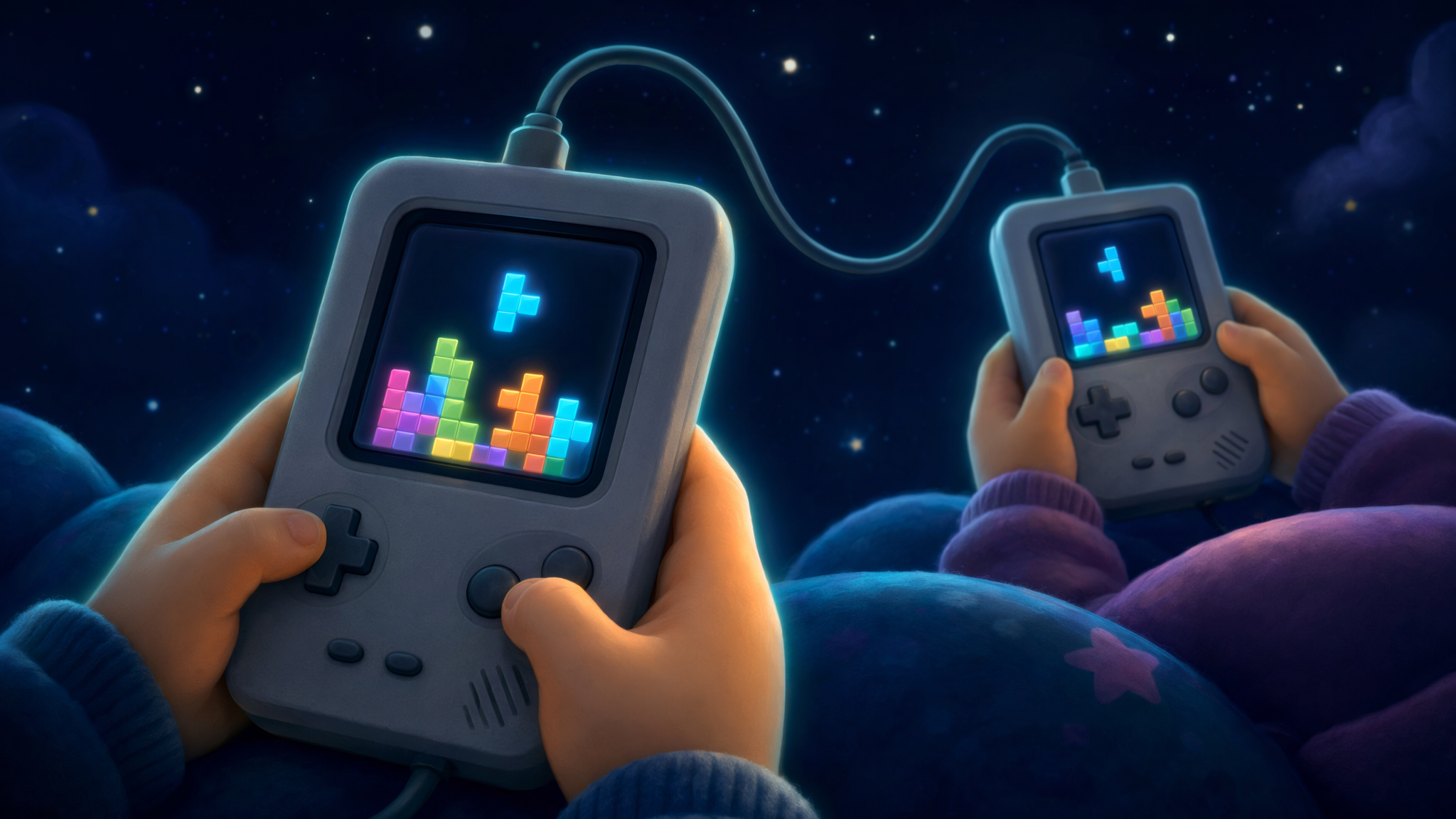
Until now, playing meant sitting in front of the family TV. The Game Boy smashed that rule: a chunky grey brick that ran real games on a couple of batteries, so you could play on the bus, in the back seat, or under the covers after bedtime. It came bundled with Tetris — falling blocks so dangerously addictive that the game travelled the whole planet, and even rode a rocket up to space. Then Pokémon pulled a genius trick: it came in two versions, and the ONLY way to 'catch 'em all' was to plug a cable into a friend's Game Boy and trade. A game in your pocket had quietly become a reason to go find your friends.
🎮 Tetris (Game Boy) · 1989🎮 Pokémon Red & Green · 1996The big leap 💡 The Game Boy put real games in your hands anywhere — and a link cable connected two players together.
Whoa! 🤯 Game Boys were almost indestructible. One survived a wartime fire, charred black on the outside — and it STILL switched on and played Tetris. It sits in a display case to this day.
 🧊🧊1993–1996
Jumping Into 3D
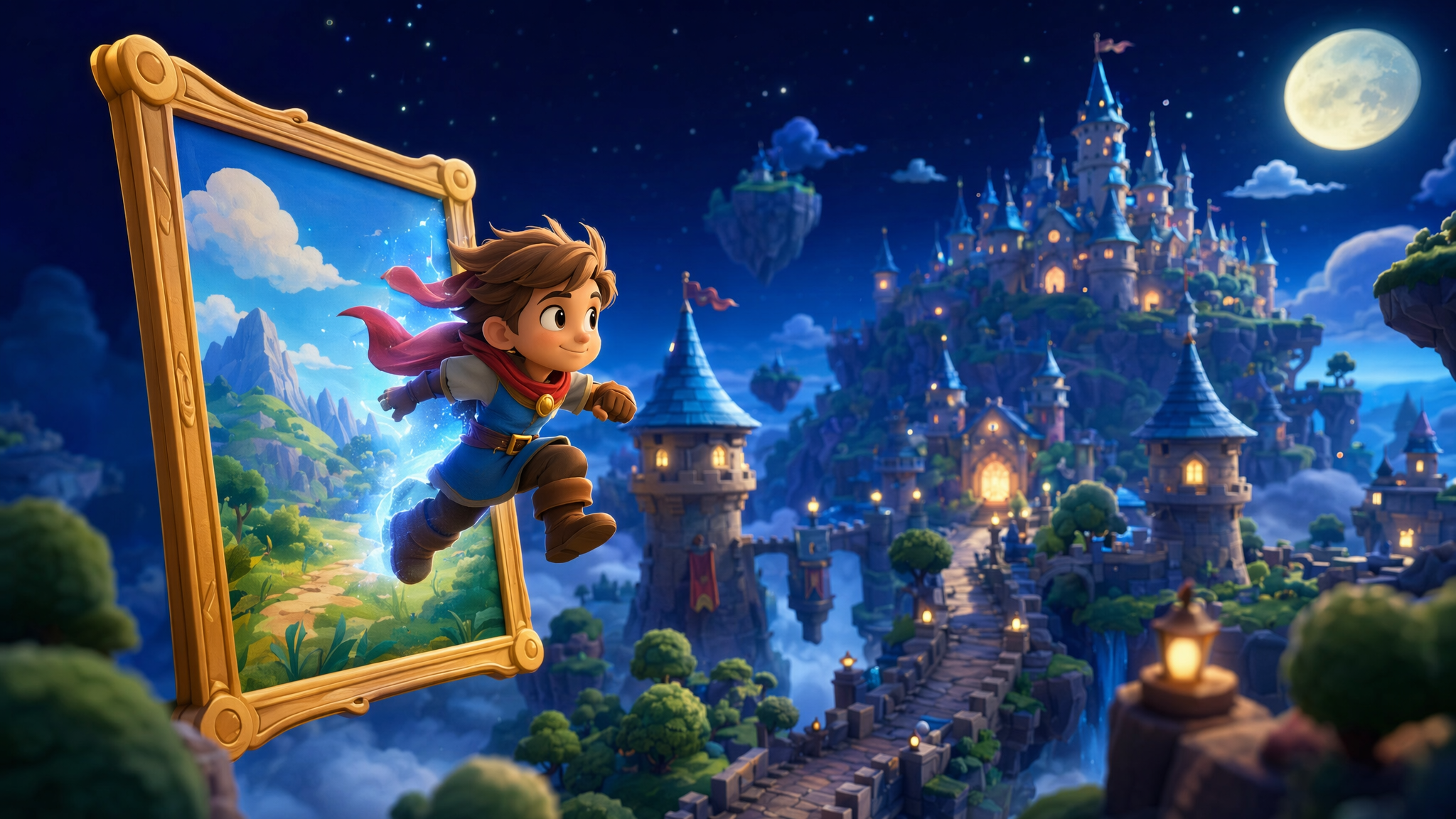
For decades, game worlds were flat — you could go left, right, up and down, but never truly INTO the screen. Then machines finally got strong enough to build worlds out of real 3D shapes, and everything changed at once. In Super Mario 64 you could sprint around a castle in any direction you liked, and even swing the camera to look around, as if you were really standing inside it. The first time players spun that camera, it felt like stepping clean through the glass of the TV into another place. Games stopped being pictures you watched and became spaces you could live in.
🎮 PlayStation · 1995🎮 Super Mario 64 · 1996The big leap 💡 Flat sideways worlds broke open into full 3D space you could move through in any direction.
Whoa! 🤯 Mario 64's way of moving and aiming the camera in 3D worked so well that almost every 3D game you play today — 30 years later — still copies it.
 👁️👁️1992–1996
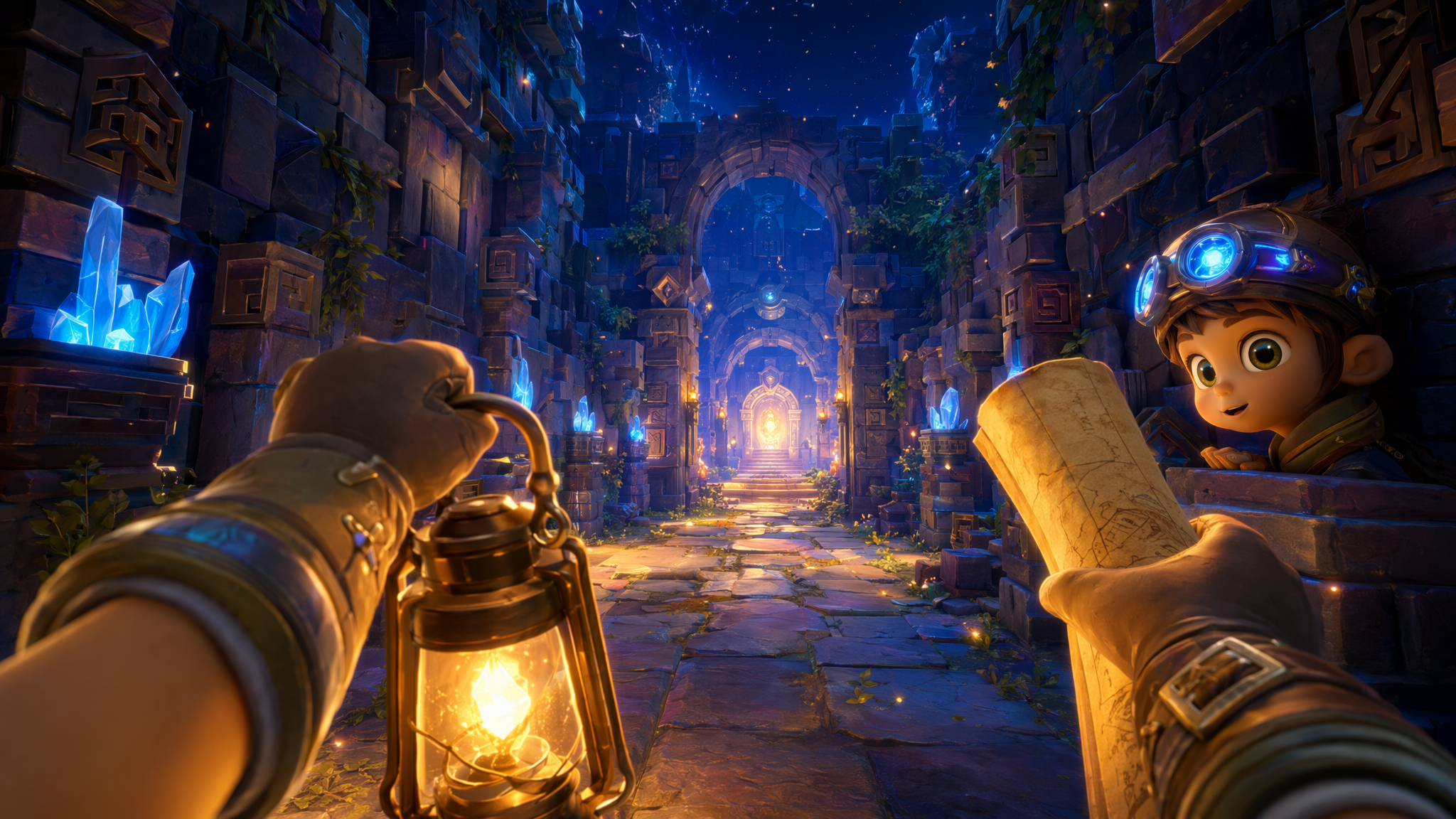
Through the Hero's Eyes: the FPS Revolution
Until now you watched your little hero from the side or from above, like a puppet on a stage. Then a tiny team did something startling: they put the camera INSIDE the hero's head. Suddenly the maze walls rose up all around you and you weren't watching an adventure — you were IN it, racing down corridors through the hero's own eyes. Wolfenstein 3D lit the fuse, Doom turned it into a worldwide craze, and Quake built its world out of true 3D shapes you could spin through in any direction. Quake also let players on opposite sides of the planet battle live over the internet — and even take the game apart to build their OWN versions, called 'mods'. (These are exciting grown-up games you'll play when you're older — but the leap they made changed gaming forever.)
🎮 Wolfenstein 3D · 1992🎮 Quake · 1996The big leap 💡 The camera moved INSIDE the hero — you saw the world through their own eyes in true 3D, and could battle (and even rebuild) the game online.
Whoa! 🤯 The makers handed players the tools to remake their games, so fans built thousands of their own versions — and a few of those 'mods' grew into giant, world-famous games all on their own.
 🌐🌐1997–2004
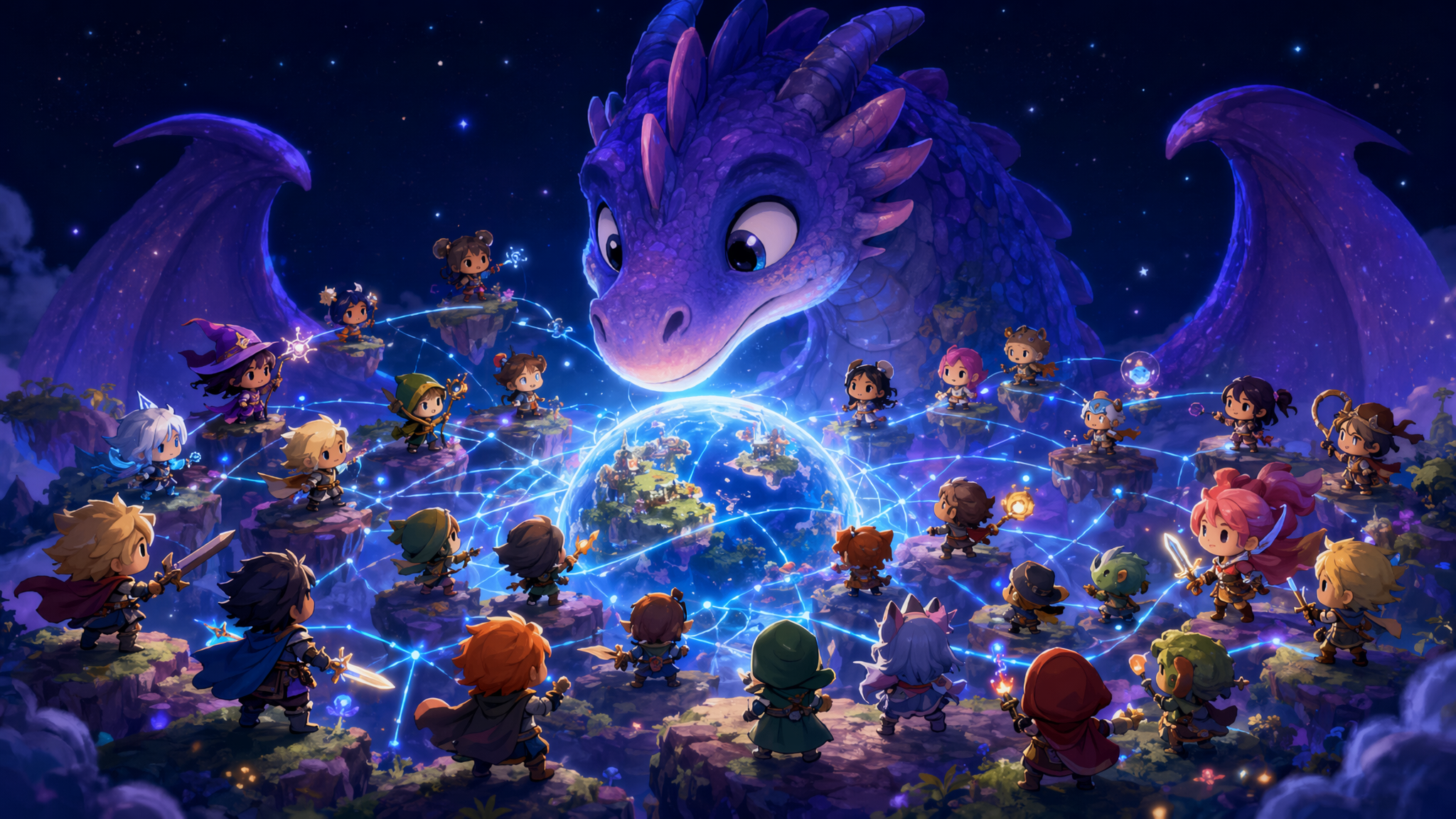
Worlds That Never End: Going Online
What if a game world didn't switch off when you did — what if it just kept on living, with thousands of real people inside it at the very same moment? The internet made it possible. In games like World of Warcraft you could team up with a total stranger on the far side of the planet to take down a dragon far too big for any single hero to face alone. Your character stayed right there in that world even after you turned the computer off, waiting for you to come back. More than ten million people logged in — a video game had quietly turned into a place you go to visit, not just a thing you play.
🎮 EverQuest · 1999🎮 World of Warcraft · 2004The big leap 💡 The internet linked thousands of players into one giant shared world that keeps living even after you log off.
Whoa! 🤯 These worlds genuinely never paused. While you slept, thousands of players on the other side of the Earth were wide awake, adventuring in the exact same world — it truly never switched off.
 🏆🏆1998–2011
Games Become a Sport: the Rise of Esports
What if playing a video game could be a real SPORT — with star players, teams, coaches and arenas full of roaring fans? In South Korea, a space-strategy game called StarCraft became exactly that: top matches were shown on TV and the best players turned into famous celebrities. Around the world, teams of friends battled in games like Counter-Strike for actual prize money. Then League of Legends turned a five-player team battle into the biggest contest of all, with world championships that fill stadiums and draw more viewers than many TV shows. Playing had quietly grown up into something millions of people gather just to WATCH.
🎮 StarCraft · 1998🎮 League of Legends · 2009The big leap 💡 Playing went pro and public — real teams, prize money, and millions of fans watching the best players compete like a championship final.
Whoa! 🤯 The world final of one of these games can pack a giant stadium AND pull in more online viewers than some of the biggest sports championships on Earth — all to watch people play a video game.
 📱📱2006–2009
Wiggle It, Tap It: Motion & Mobile
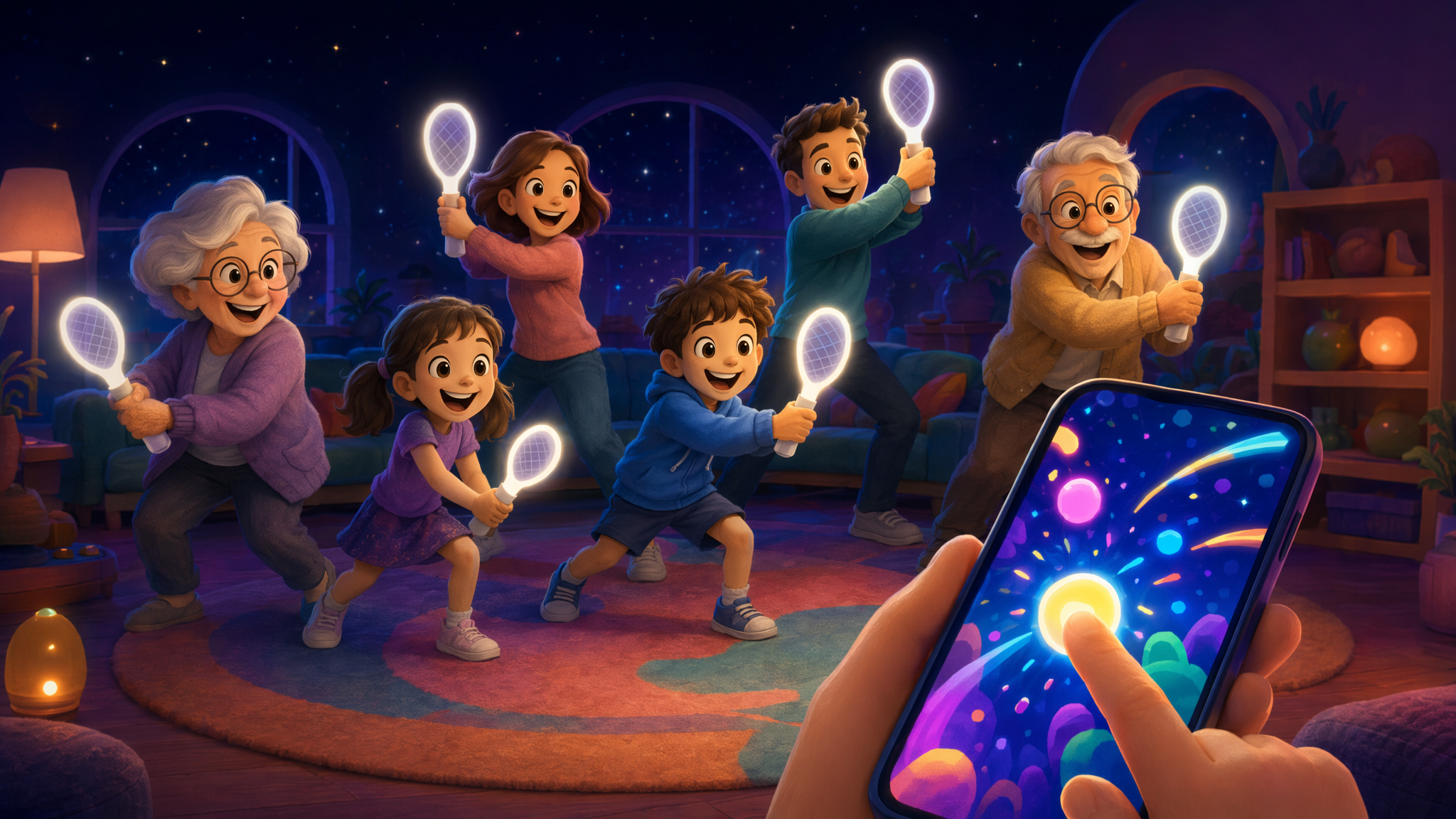
For thirty years you played games by pressing buttons with your thumbs. Then two gadgets flipped that completely on its head in the very same few years. Nintendo's Wii handed you a wand and said: swing your whole body — and suddenly grandparents who'd never touched a controller in their lives were up off the couch, swatting at a virtual tennis ball and laughing. Meanwhile the iPhone slipped a touchscreen into everyone's pocket, and a game about flinging grumpy birds with one finger became something millions of people did everywhere — in line, on the bus, even at the dinner table. Playing games stopped being just for 'gamers.' Now it was for everyone.
🎮 Wii Sports · 2006🎮 Angry Birds · 2009The big leap 💡 The Wii let you play with your whole body, and the touchscreen phone turned everyone's pocket into a game machine.
Whoa! 🤯 The Wii got so many grown-ups and grandparents playing that it outsold far more powerful consoles. Sometimes the most FUN idea beats the most powerful machine.
 🧱🧱2009–2011
Build Anything: the Creator Era
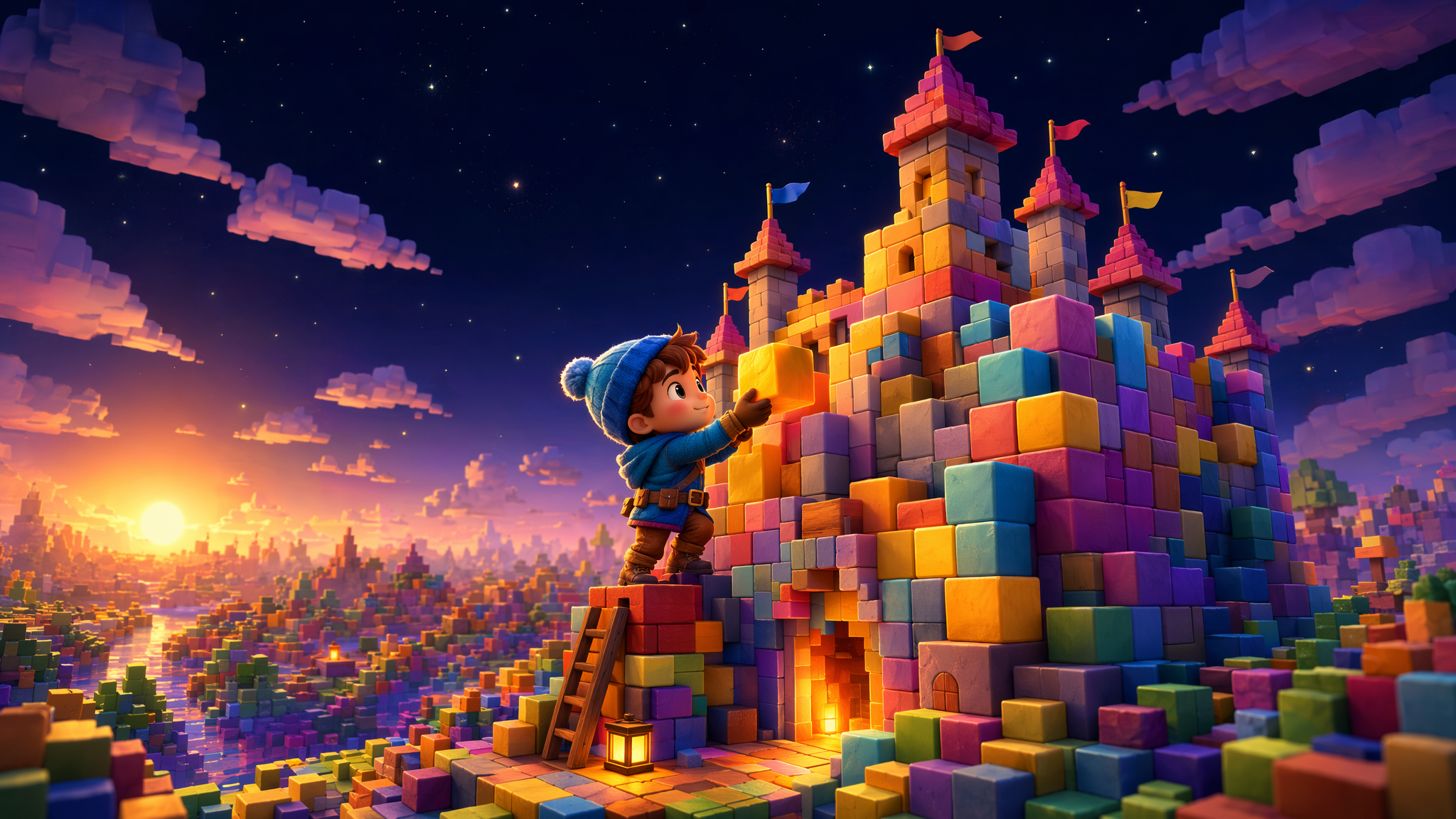
Every game so far had handed you levels that somebody else designed, usually with one right way to win. Minecraft tore that idea up completely. It dropped you into an endless world made of blocks — a world that builds itself differently every single time — and simply said: make whatever you want. There's no final boss and no 'YOU WIN' screen; you just dig, craft, survive the spooky nights, and build a castle, a roller coaster, or an entire working city. Players had stopped being only players and become creators — and the wildest part of all is what happened next.
🎮 Minecraft · 2011The big leap 💡 Instead of beating someone else's levels, you got an endless world of blocks to build ANYTHING — and players became creators.
Whoa! 🤯 Minecraft has now sold over 300 million copies — more than any other video game in history, and more than the number of people living in most countries on Earth.
 🚀🚀2011–today
Now: Streaming, Last-One-Standing & Beyond
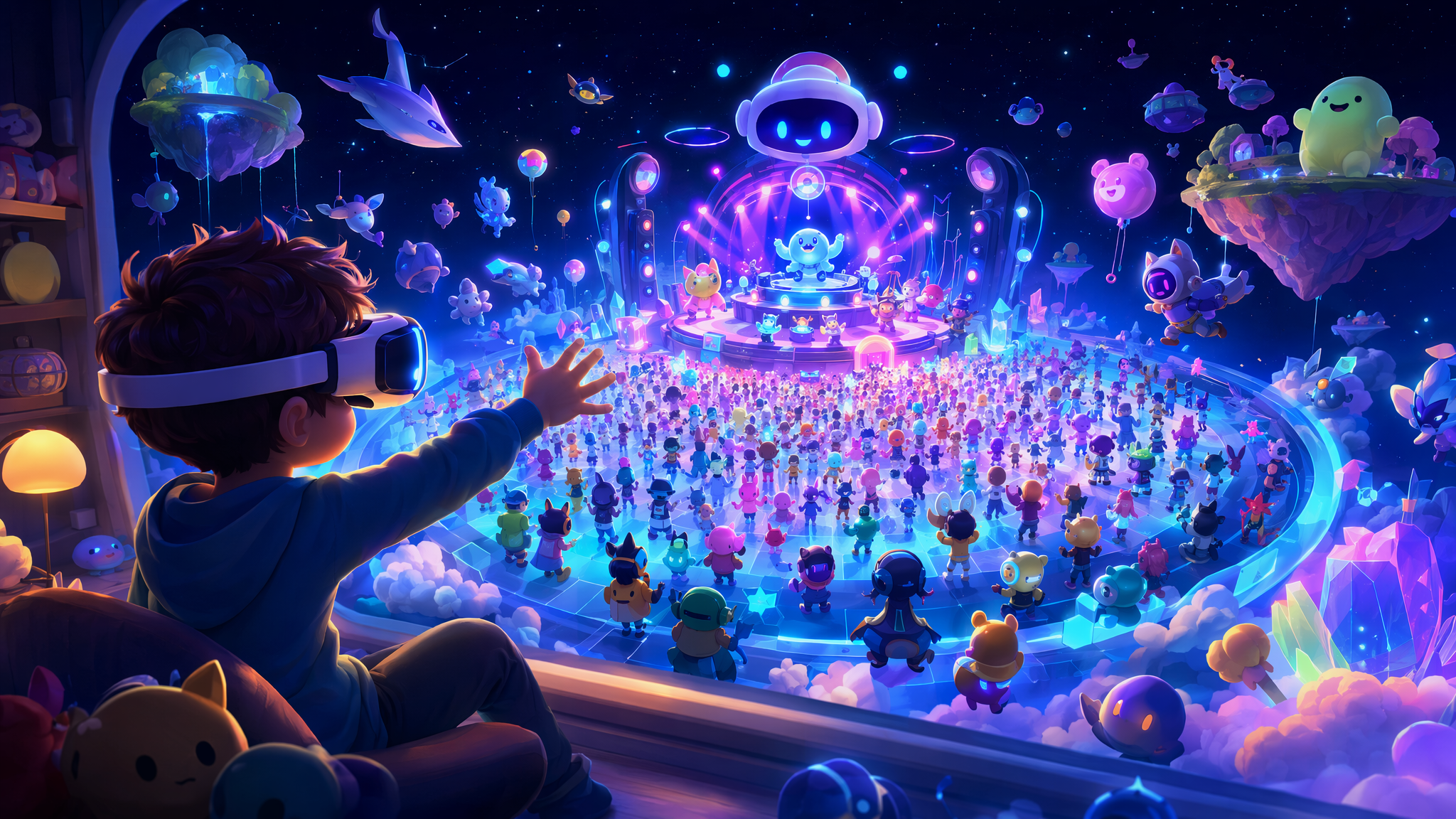
And here's where the story finally catches up to you. Watching other people play became as huge as playing yourself — a single streamer can pull a bigger crowd than a TV show. A new kind of game began dropping a hundred players onto a shrinking island for one last-one-standing showdown, and games like Fortnite grew into global hangouts with real concerts and dances happening inside them. Strap on a VR headset and you can reach into the world with your own two hands. But the most amazing part? The tools to MAKE all of this are now in kids' hands too — including yours.
🎮 Fortnite · 2017🎮 Twitch + VR · 2011+The big leap 💡 Watching games got as big as playing them, '100 players, last one standing' took off, and VR puts you right inside the game.
Whoa! 🤯 Some concerts held INSIDE games have drawn crowds bigger than any stadium on Earth could hold — millions of people all dancing in the same virtual spot at once. 🎉
…and the next chapter of this story? That one's yours to write. 🚀